
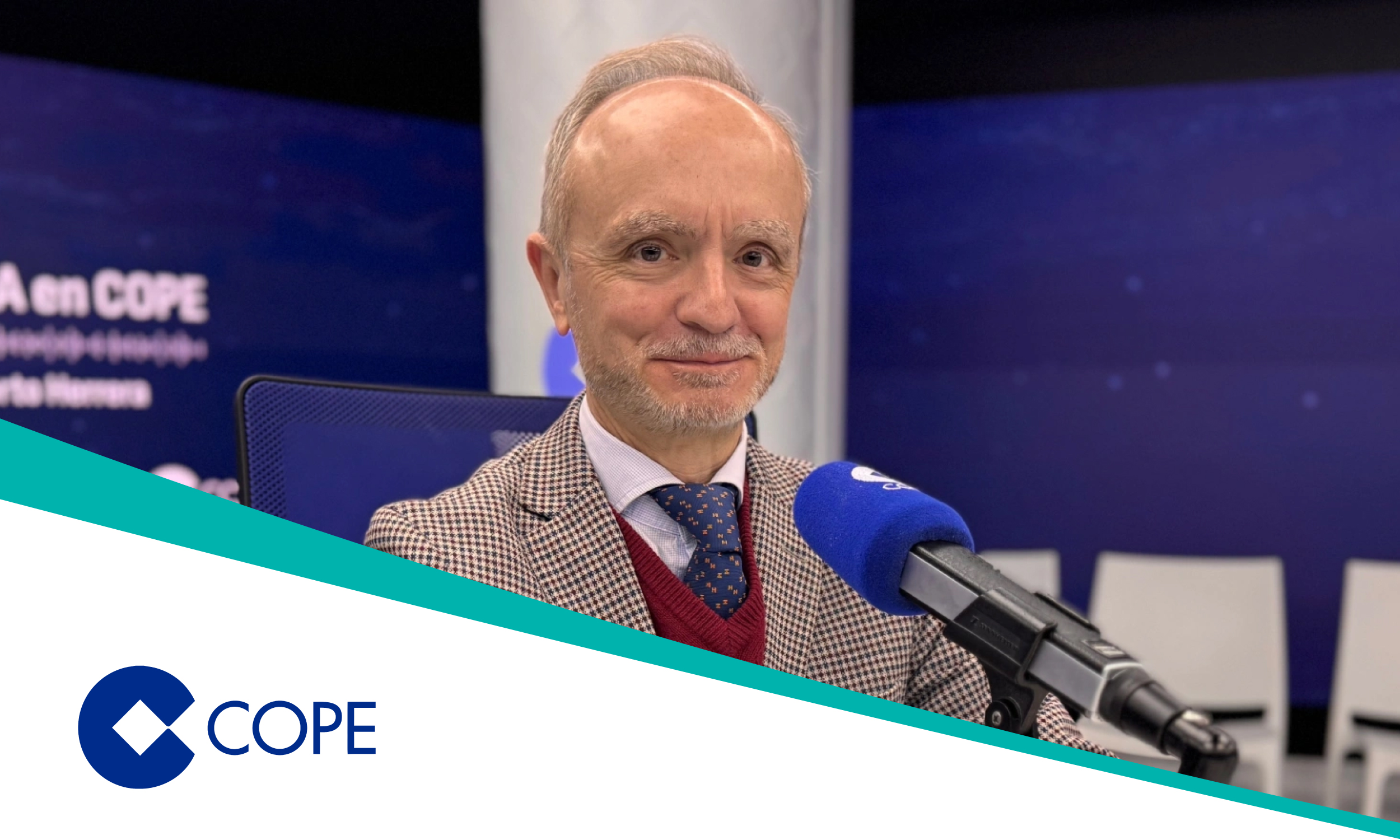
The doctor is leading a project that has achieved up to 100% success in mice and could be available within 5 to 7 years to treat alopecia, as he explained on Herrera en COPE.
A Spanish study may be close to finding a solution to common baldness. A team led by Eduardo López Bran, Head of Dermatology at Hospital Clínico San Carlos, has developed an experimental cell therapy that has managed to reverse hair loss in mice with a success rate close to 100%. The doctor himself explained this on Herrera en COPE, where he detailed the progress of a project that opens the door to restoring hair with a single injection.
An injection to regenerate the follicle
Unlike current treatments, which focus on thickening existing hair, this new experimental cell therapy aims to go a step further. The goal is to inject stem cells into the scalp so they can differentiate and generate new hair follicles where they no longer existed. According to the doctor, the ultimate objective is “to ensure that, with the administration of the therapy in a single injection, the stem cells we deliver are able to produce new hair follicles again.”
Results in the animal model are very promising. The therapy achieved hair regrowth in 90% of male mice and 100% of females in which alopecia had been induced. Despite this success, Eduardo López Bran urges caution until the results are confirmed in humans. “If we are able to translate the successes achieved in the animal model to human trials, it will be very good news for all those patients—men and women—who suffer from androgenetic alopecia, or common baldness,” he noted.
Timelines and safety: next steps
Before reaching patients, the treatment must go through several stages. The team is currently preparing to carry out the preclinical safety studies required by regulatory authorities. Once its safety is confirmed, clinical trials in humans would begin, potentially starting at the end of this year or early 2027. If all phases progress as expected, the drug could be approved and available to patients within a period of 5 to 7 years.
Another key point for the project’s scientific director, Eduardo López Bran, is accessibility. Although the research involves high costs, he has emphasized that the treatment should reach the market at a reasonable price. “I believe that if this treatment does not have a reasonable price, it would not be a good treatment for patients,” he stated. His aim is for it to be accessible to everyone, especially young people, for whom alopecia can cause “significant concern and a major loss of self-esteem.”
Spain, a country of bald people
The announcement of this breakthrough is particularly significant in Spain, as it is the country with the highest prevalence of baldness in the world. Eduardo López Bran attributes this high incidence to racial factors, noting that “the Caucasian population has a higher incidence of androgenetic alopecia than other groups.” He also points out that factors such as “a very hectic lifestyle” may further accentuate genetic predisposition in the Spanish population.
The researcher himself, who suffers from “advanced baldness” and is not a good candidate for a hair transplant due to the characteristics of his skin and donor area, has admitted that he hopes to benefit from this cell therapy in the future. Eduardo López Bran concluded: “I will make my scalp, my head available if I am accepted and meet the criteria for the clinical trials as soon as they are available.”
More info: COPE